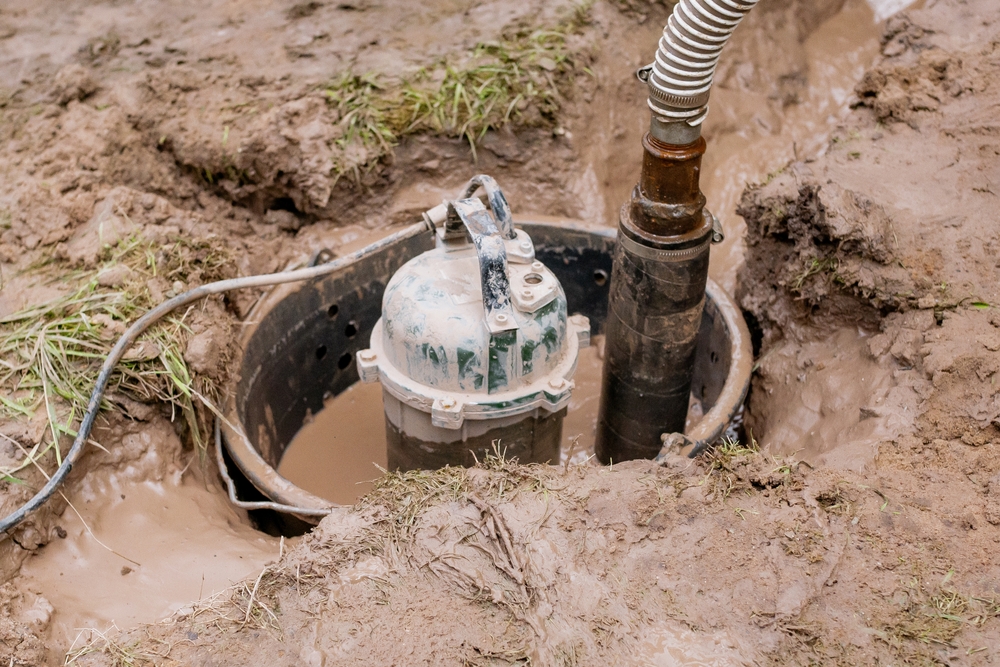
 Rhode Island Basements Face Real and Measurable Flood Risk
Basement flooding is not an abstract concern for homeowners across Rhode Island and Southeastern Massachusetts — it is a documented and recurring problem driven by the region's precipitation patterns, soil composition, and aging drainage infrastructure. According to NOAA's Rhode Island State Climate Summary, annual precipitation in the state has remained consistently above the long-term historical average since 1970, and five of the ten wettest years in Rhode Island's recorded history have occurred since the year 2000. The Rhode Island Climate Change Program's science review further notes that extreme precipitation events in the Northeast have increased by 60 percent due to climate change, a trend that regional authorities warn will worsen future flash flooding and river flooding across the state. Rhode Island's coastal lowlands receive approximately 45 to 50 inches of precipitation annually, while inland New England uplands receive 50 to 55 inches, according to the Rhode Island Department of Environmental Management — levels that create sustained groundwater pressure against home foundations throughout the wet season and well beyond it. Wood's Rooter Service, based in East Providence, Rhode Island, provides professional sump pump service, repair, and installation to homeowners across Rhode Island and Southeastern Massachusetts who need a functioning pump system to manage that pressure before it becomes a flooded basement.
The scale of potential loss from basement flooding places sump pump reliability squarely in the category of critical home infrastructure. The Federal Emergency Management Agency reports that just one inch of water entering a home can cause up to $25,000 in damage, accounting for flooring, drywall, insulation, stored belongings, and the mold remediation that almost always follows. The Insurance Information Institute's data from 2019 through 2023 shows that one in every 67 insured homeowners filed a water damage or freezing claim each year, with an average claim payout of $15,400. Rhode Island's 2010 historic flooding event alone resulted in a FEMA Major Disaster Declaration covering all counties in the state, with nearly $79 million in disaster assistance approved for individuals and business owners across the region, according to the National Weather Service. The lesson from both the data and the regional history is the same: a working sump pump is not a luxury for Rhode Island and Massachusetts homeowners — it is a frontline defense that must be maintained, tested, and repaired before a storm arrives.
Most Homeowners Do Not Know Their Sump Pump Has Already Aged Out
Sump pumps operate silently in basements and crawl spaces, rarely drawing attention until they fail. That invisibility makes them one of the most commonly neglected systems in a home. According to multiple industry and engineering sources — including American Family Insurance and licensed plumbing professionals — the average sump pump has a useful service life of 7 to 10 years. Pumps that operate in regions with frequent or heavy rainfall, like those in Rhode Island and Southeastern Massachusetts, cycle more often and wear faster than units in drier climates, with high-use systems sometimes reaching the end of their reliable service life closer to five to seven years. A pump that is past the ten-year mark and has never been professionally inspected is a liability, not a protection — and in most cases the homeowner has no idea the unit is operating on borrowed time. Industry professionals consistently note that a pump can appear to run normally right up until the moment it fails under load during a significant rain event, which is precisely the moment the homeowner needs it most. Wood's Rooter's pump service team assesses system age, condition, float switch function, discharge line integrity, and operational output — giving homeowners an accurate picture of where their system stands before the next storm makes that assessment for them.
More than 60 percent of American homes experience below-ground moisture issues at some point, and 98 percent of homes with basements will experience some form of water damage during their lifetime, according to data cited by water damage restoration industry research. These figures reflect the reality that groundwater intrusion is not a rare or unusual event — it is a predictable consequence of soil saturation, foundation pressure, and the limitations of older drainage systems. Homes built before modern waterproofing standards were widely adopted are particularly vulnerable, and Rhode Island has a substantial stock of older housing. When a sump pump in one of these homes fails — whether from mechanical wear, a stuck float switch, a clogged discharge line, or an overloaded motor — there is no secondary protection unless a backup system is already in place. Wood's Rooter responds to sump pump failures 24 hours a day, seven days a week, and does not charge an emergency fee regardless of when the call comes in, which means homeowners are not forced to make financial calculations during a flooding event.
Power Outages and Heavy Storms Arrive at the Same Time for a Reason
The single most dangerous scenario for a sump pump is one that occurs regularly across Rhode Island and Massachusetts: a major storm event that simultaneously saturates the ground and knocks out electrical power. Standard sump pumps run entirely on grid electricity, which means a power failure at the peak of a storm leaves the pit unprotected at the exact moment groundwater is rising fastest. This is not a theoretical risk. Nor'easters, tropical storm remnants, and severe spring thunderstorms are well-documented causes of extended power outages across New England — and the same weather systems that cut power also drive the groundwater events that demand pump operation. FEMA's flood insurance and preparedness data consistently points to sump pump failure during power outages as one of the most common triggers for basement flooding claims, particularly in the Northeast where storm systems combine wind, rain, and infrastructure disruption. Standard homeowners insurance policies, as noted by the Insurance Information Institute, typically do not cover sump pump failure or sewer backup events unless the homeowner has purchased a specific additional endorsement — meaning an unprotected pump failure often results in an out-of-pocket loss measured in thousands of dollars. Wood's Rooter installs and services battery backup sump pump systems that activate automatically when the primary pump loses power or fails mechanically, providing continuous operation through extended outages and protecting basements during exactly the conditions where grid-dependent primary pumps go offline.
A properly installed battery backup system typically costs between $600 and $2,000 fully installed, depending on system capacity, battery type, and installation complexity, according to pricing data from Angi and HomeGuide. That investment range stands against a baseline flooded basement cost that routinely exceeds $10,000 once water extraction, drying, mold remediation, and structural repair are factored in — and against FEMA's documented benchmark of $25,000 in potential damage from a single inch of standing water. Battery backup systems for sump pumps can continue operating for five to 53 hours after a power outage depending on the battery capacity and pump cycling rate, which is more than sufficient to carry a home through the duration of most Northeast storm events. Wood's Rooter's pump service includes evaluation of whether a home's current primary pump is appropriately matched to a backup system, and technicians can recommend and install the right backup configuration for the basement's size, water table conditions, and local storm exposure.
Warning Signs That a Sump Pump Needs Professional Attention Now
A failing sump pump almost always provides warning signals before it stops working entirely — but only if the homeowner knows what to look for. Industry sources including licensed plumbers and pump specialists identify several consistent indicators that a pump needs professional inspection or replacement. Unusual sounds — grinding, rattling, gurgling, or loud humming — suggest internal component wear, a damaged impeller, or debris caught in the mechanism. A pump that cycles on and off more than two to three times per day under normal conditions may have a failing float switch that cannot accurately read water levels, causing the unit to run unnecessarily and accelerating motor wear. Visible rust or corrosion on the pump body or discharge connections indicates material breakdown that compromises long-term reliability. A pump that fails to engage at all when the pit fills with water points to electrical issues, a jammed switch, or a burned motor. And any pump over ten years old should be considered for proactive replacement regardless of whether symptoms are present, because internal components wear invisibly. According to the Rhode Island Department of Environmental Management, extreme precipitation events have increased significantly across the Northeast, meaning Rhode Island and Massachusetts pumps are working harder than historical design assumptions anticipated. Wood's Rooter technicians are trained to identify all of these warning signs during a service visit, and because the company provides free estimates, homeowners can get a professional assessment without a diagnostic fee standing between them and accurate information about their system.
Mold growth is one of the most costly and health-significant consequences of a delayed response to pump failure. According to the Centers for Disease Control and Prevention, mold can begin forming on wet building materials within 24 to 48 hours of water exposure. Once mold takes hold in a basement — on framing, drywall, insulation, or stored items — professional remediation adds a separate and significant cost on top of the physical water damage repairs. Water damage restoration professionals classify basement flooding from sump pump failure as Category 2 gray water, which requires antimicrobial treatment of all affected surfaces and removal of porous materials that cannot be dried fast enough to prevent microbial growth. Acting on pump warning signs before failure — or calling Wood's Rooter immediately when a pump goes down — is the difference between a manageable repair and a multi-week remediation project.
Sump Pump Installation Requires Proper Sizing, Placement, and Discharge Routing
Installing a sump pump correctly is not simply a matter of placing a unit in a pit and plugging it in. Proper sump pump installation requires matching pump capacity to the volume of water the pit is expected to receive, placing the pit at the lowest point of the basement to ensure complete drainage, correctly sizing the discharge line to prevent flow restrictions, routing the discharge line far enough from the foundation to prevent recirculation back into the pit, and ensuring the check valve is properly installed to stop backflow between pump cycles. Incorrectly installed systems can create new problems: an undersized pump in a high-inflow basement will run continuously, overheat, and fail prematurely; a discharge line that terminates too close to the foundation simply returns water to the ground it just left; and a missing or improperly installed check valve forces the pump to re-lift previously discharged water on every cycle, adding unnecessary wear. Professional installation of a new primary sump pump typically ranges from $800 to $1,500 according to Angi's 2026 pricing data — a figure that reflects the labor involved in doing the installation correctly, not just quickly. Wood's Rooter holds Rhode Island Contractor License GC-28414 and Underground Utility Contractor License UU-44252, and the company has been installing and servicing pump systems in Rhode Island and Southeastern Massachusetts since 2007 — meaning technicians understand the local soil conditions, water table behavior, and seasonal groundwater patterns that determine how a system needs to be configured to function reliably when the region's weather demands it.
The Rhode Island DEM specifically calls out the combination of increasing precipitation intensity and aging residential drainage infrastructure as a compounding risk factor for homeowners across the state. Homes in communities like Warwick, Cranston, Cumberland, Smithfield, North Providence, and Woonsocket — many of which sit in areas with documented groundwater pressure and storm drainage limitations — represent exactly the kind of properties where pump installation quality directly determines whether a major rain event results in a dry basement or a flooded one. Wood's Rooter's familiarity with the local market, combined with their licensing credentials and same-day service availability, gives homeowners in these communities a local option that understands both the technical and geographic dimensions of the problem they are trying to solve.
Routine Maintenance Is What Keeps a Sump Pump Working When It Matters
A sump pump that is installed correctly but never tested or maintained is not a reliable flood defense — it is simply a pump that has not been asked to prove itself yet. Pump specialists and licensed plumbers uniformly recommend an annual maintenance routine that includes testing the pump by pouring water into the pit and confirming that the float switch triggers operation at the correct level, inspecting the discharge line for obstructions or damage, checking the check valve for proper function, clearing any debris from the pit that could clog the intake screen, and verifying that the backup system — if one is installed — holds a charge and activates as designed. For battery backup units, batteries should be tested and replaced on the manufacturer's recommended cycle, typically every two to five years depending on battery chemistry, because a backup system with a dead or degraded battery provides no protection. According to industry maintenance guidance, a consistent annual inspection routine can meaningfully extend a pump's reliable service life and — more importantly — ensures the system is actually ready to function during the wet season rather than simply assumed to be. Wood's Rooter offers pump inspection and maintenance service for both primary and backup systems, and because the company provides quotes over the phone and free on-site estimates, scheduling a maintenance visit does not require navigating a diagnostic fee before homeowners know what they are dealing with.
The financial case for routine pump maintenance is straightforward when measured against the potential cost of failure. Replacing a sump pump before it fails typically costs between $500 and $1,500 for a professionally installed unit, according to Angi. A flooded basement resulting from pump failure during a storm routinely costs $10,000 to $25,000 once cleanup, drying, structural repair, and mold remediation are included — and that figure does not account for the loss of stored belongings, finished basement materials, or the disruption to a household during a multi-day or multi-week restoration process. The Insurance Information Institute confirms that standard homeowners insurance policies do not automatically cover sump pump failure, and that homeowners who discover this gap after the flood rather than before it have limited financial recourse. Proactive service by a licensed, local contractor like Wood's Rooter is the only reliable way to stay ahead of a problem that gives very little warning when it decides to occur.
Wood's Rooter Provides Sump Pump Service Across Rhode Island and Massachusetts
Wood's Rooter Service is a family-owned and operated drain and pump company headquartered at 28 Boston St, East Providence, Rhode Island. Founded in 2007 by Steve Wood, who trained under four generations of family experience in drain and pump systems, the company serves all of Rhode Island, Southeastern Massachusetts, and Connecticut. Wood's Rooter is licensed, bonded, and insured in both states, holding Rhode Island Contractor License GC-28414 and Underground Utility Contractor License UU-44252. Technicians are available 24 hours a day, seven days a week, and the company does not charge an emergency fee — regardless of the time, day, or weather conditions when a pump failure occurs. Free estimates are provided on-site, and quotes are available over the phone, which means homeowners can understand their options and costs before committing to any work. For sump pump repair, replacement, new installation, battery backup installation, and routine maintenance service across Rhode Island and Southeastern Massachusetts, Wood's Rooter can be reached at (401) 432-6405 in Rhode Island or (508) 377-4737 in Massachusetts.
References
Federal Emergency Management Agency (FEMA) — National Flood Insurance Program: Cost of Flooding https://www.floodsmart.gov/know-your-risk/cost-of-flooding
NOAA / NCICS — Rhode Island State Climate Summary 2022 https://statesummaries.ncics.org/chapter/ri/
Rhode Island Climate Change Program — Science of Climate Change https://climatechange.ri.gov/climate-science
Rhode Island Department of Environmental Management — Sump Pump Installation in RI and MA (via Wood's Rooter Service Articles) https://www.woodsrooter.com/drain-service-articles/76-sump-pump-installation-in-rhode-island-and-massachusetts-how-woods-rooter-helps-protect-local-homes
National Weather Service — Flooding in Rhode Island https://www.weather.gov/safety/flood-states-ri
Insurance Information Institute — Water Damage and Freezing Claims Data (2019–2023) https://www.iii.org
Angi — Sump Pump Installation Cost 2026 https://www.angi.com/articles/sump-pump-installation-cost.htm
Angi — Sump Pump Battery Backup Cost 2026 https://www.angi.com/articles/sump-pump-battery-backup-cost.htm
HomeGuide — Sump Pump Battery Backup Cost https://homeguide.com/costs/sump-pump-battery-backup-cost
Centers for Disease Control and Prevention (CDC) — Mold and Dampness in Buildings https://www.cdc.gov/niosh/mold/about/?CDC_AAref_Val=https://www.cdc.gov/niosh/topics/indoorenv/mold.html
American Family Insurance — How Long Does a Sump Pump Last https://www.amfam.com/resources/articles/at-home/how-long-should-a-sump-pump-last
This Old House — Water Damage Statistics 2025 https://www.thisoldhouse.com/foundations/water-damage-statistics